
Sign up for this awesome deal today!
When you compare a boiler vs furnace, the main difference is how heat reaches your living spaces. A furnace heats air and uses a blower and ductwork to push it through your home, while a boiler heats water and sends hot water or steam through pipes to radiators, baseboards, or radiant floors. Both provide dependable warmth, but they feel noticeably different through the heating season. If you’re updating older equipment or planning a renovation and looking for heating service in Cherry Hill, NJ, this guide explains how each system works and how to weigh comfort, noise, airflow, and summer cooling to find the best fit.
Every central heating setup relies on a specific fuel source, heat exchanger, and distribution network to manage indoor temperatures. Understanding the difference between boiler and furnace mechanics helps clarify why each system produces a distinct type of heat. Here is how each configuration generates warmth and circulates it through your living areas.
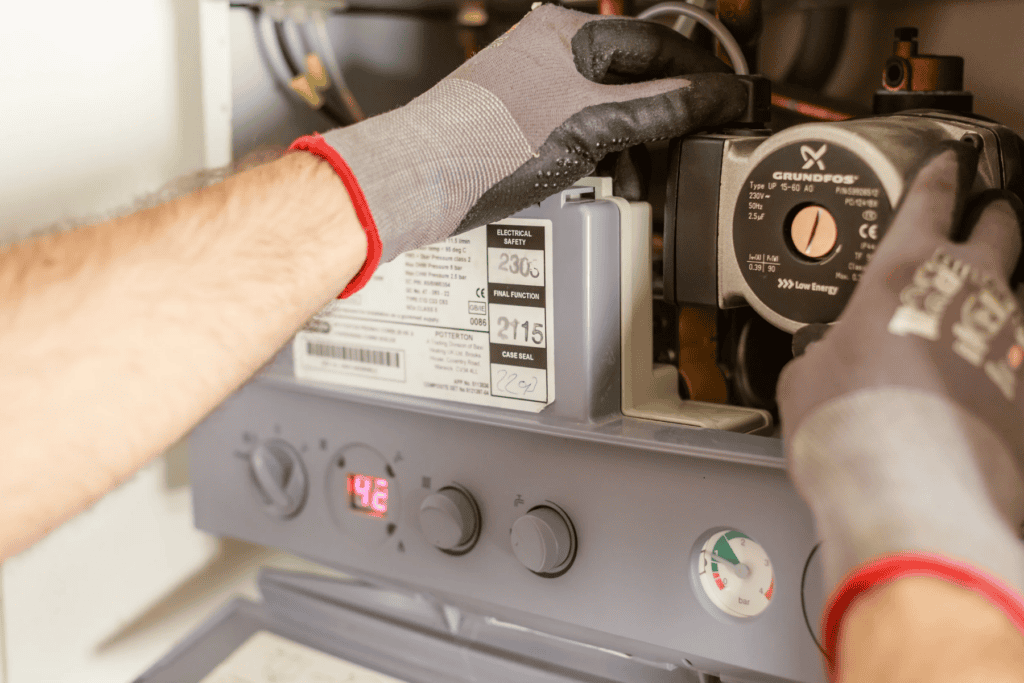
A boiler is a closed vessel that heats water using natural gas, oil, or electricity to supply hydronic heating to your living space. Instead of heating air directly, the system circulates hot water or low-pressure steam through sealed pipes to terminal units.
These terminal units commonly include cast-iron radiators, slender baseboard units, or flexible tubing embedded underneath your finished flooring. As the hot liquid flows through the system, it radiates steady thermal energy into objects and people in the room. Once the water gives up its heat, it returns to the central unit to be reheated and recirculated.
A residential furnace operates as a forced-air system that pulls cooler indoor air through return vents and heats it across a combustion chamber or electric element. Once the air reaches the set supply temperature, a motorized blower pushes it through a network of sheet metal or flexible ducts. This warm air then discharges into individual rooms through supply registers positioned along floors, walls, or ceilings.
Because air moves quickly through duct pathways, a furnace can adjust room temperatures quickly. The cycle repeats continuously as the thermostat detects temperature drops and signals the burner to ignite again.
Choosing between a furnace and a boiler depends on daily comfort habits and household routines. The difference between boiler heat vs forced air is noticeable as soon as cold weather arrives in South Jersey. Each design creates a distinct indoor environment with its own set of practical advantages and drawbacks.
Boilers provide an even, gentle warmth that many homeowners find exceptionally comfortable during long cold spells. Because hydronic systems don’t rely on blowers, they run almost silently and don’t push dust, pet dander, or other airborne particles through the house. They also tend to preserve natural indoor air quality better in winter because they don’t blow dry air across living spaces.
Furnaces deliver rapid heat on demand, which helps when you want to warm a chilly room after adjusting the thermostat. However, the constant rush of air through supply vents can produce noticeable background noise and stir up settled dust. Forced-air systems can also feel drafty between heating cycles, especially if air temperatures drop quickly once the blower shuts off.
Each system’s mechanical footprint plays a significant role in how it fits your property. Furnaces require substantial space for ductwork runs, plenum boxes, and return drops, while boilers rely on narrow copper or PEX pipes that route neatly through wall cavities. How each system pairs with central cooling is another major factor.
A careful comparison of boiler vs furnace options helps clarify which equipment matches your daily living style. If you already have sound ductwork and prefer a single unified distribution network for year-round climate control, a furnace makes practical sense. If you prioritize silent operation, uniform radiant warmth, and room-by-room zoning, hydronic equipment remains an attractive alternative.
A modern heating unit cannot deliver expected comfort if your building envelope allows thermal energy to escape. Even with a well-maintained boiler or furnace, heat loss through uninsulated attics, leaky crawl spaces, and gaps in exterior walls undermines heating performance. Whole-house efficiency starts with how well your structure retains conditioned warmth.
Leaky ductwork in an unconditioned attic or crawl space can lose significant amounts of heated air before it reaches your living room. Scheduling professional duct sealing prevents treated air from spilling into unoccupied spaces while keeping dusty crawl-space air out of your breathing supply. Radiator systems also suffer when exterior walls lack proper insulation, as thermal energy quickly escapes outdoors instead of lingering in the room.
A comprehensive home energy assessment uncovers hidden air leaks and insulation gaps that cause drafty rooms and uneven temperatures. For homeowners seeking balanced heating and cooling in Cherry Hill, sealing the building envelope helps keep heat inside where your family needs it.
Switching from a boiler to a furnace, or from a furnace to a hydronic system, represents an extensive mechanical renovation. Converting to a furnace requires installing an entire network of supply and return ductwork, which may require cutting into finished ceilings, walls, or closets. Converting to a boiler requires running new hydronic piping throughout the structure and placing radiators or radiant manifolds in every zone.
The right decision depends on your home’s existing infrastructure, architectural layout, and personal comfort goals. Scheduling a professional walkthrough or indoor air quality assessment gives you a clear understanding of what the conversion involves before you commit.
Both hydronic and forced-air systems offer proven ways to maintain winter warmth throughout South Jersey. Furnaces provide fast heating and integrate seamlessly with central air systems, while boilers deliver steady, radiant warmth with quiet operation and minimal dust movement. Reviewing your property layout and long-term plans will help you choose the setup that best fits your daily lifestyle.
When you review a boiler vs. furnace for an equipment upgrade, remember that your home’s thermal boundary plays an equal part in overall comfort. Pairing quality equipment with proper attic insulation and sealed air pathways delivers the most consistent results year-round. Homeowners who need dependable heating service in Cherry Hill, NJ, can rely on a thorough evaluation to identify the ideal path forward.
Choosing the right heating system is an important investment in your home’s comfort and energy efficiency. The experienced team at Allied Experts can evaluate your existing equipment, inspect your home’s insulation and ductwork, and provide tailored recommendations. From system replacements to dependable heating maintenance and repair, our licensed professionals guide you through every stage.
We provide upfront pricing so you know what to expect before work begins. Our team also offers a 24/7 live answering service, so you can always reach a representative with questions or to book an appointment. Contact Allied Experts today to schedule a heating consultation and keep your household warm all winter long.